

Uganda is positioning itself to become a regional laboratory for insurance innovation, believing that artificial intelligence, fintech partnerships and regulatory experimentation can help close one of Africa’s largest financial protection gaps.
That ambition was on full display at the Third Annual Insurance Regulatory Sandbox Insurtech Workshop, where more than 80 participants from the insurance industry, banking sector, fintech ecosystem, government and development partners gathered to discuss how technology can reshape insurance for millions of people who remain outside the formal financial safety net.
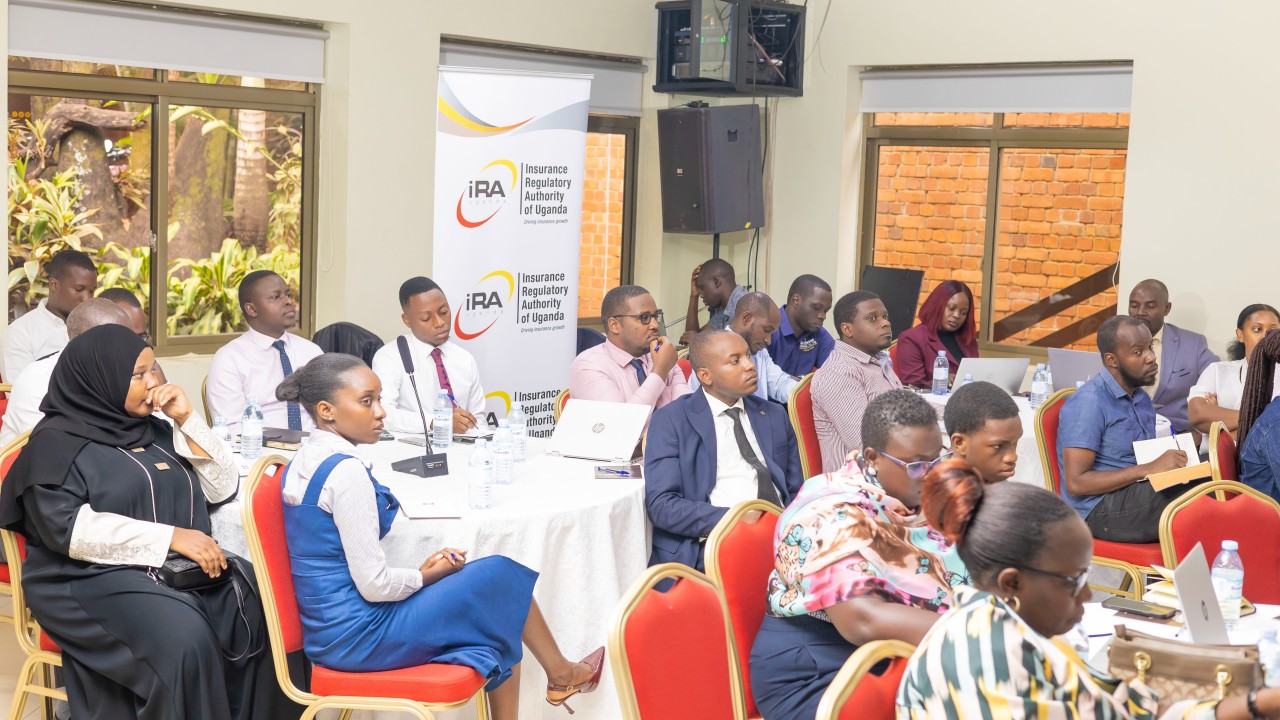
Opening the workshop, Acting Chief Executive Officer DR. SANDE PROTAZIO of IRA Uganda challenged industry leaders to rethink insurance in an era defined by artificial intelligence, changing consumer behaviour and digital ecosystems.
“Customers increasingly expect insurance to be as simple, accessible and convenient as the other digital services they use every day. If we are to remain relevant, we must be prepared to rethink how we design products, deliver services and engage our customers,” he said.
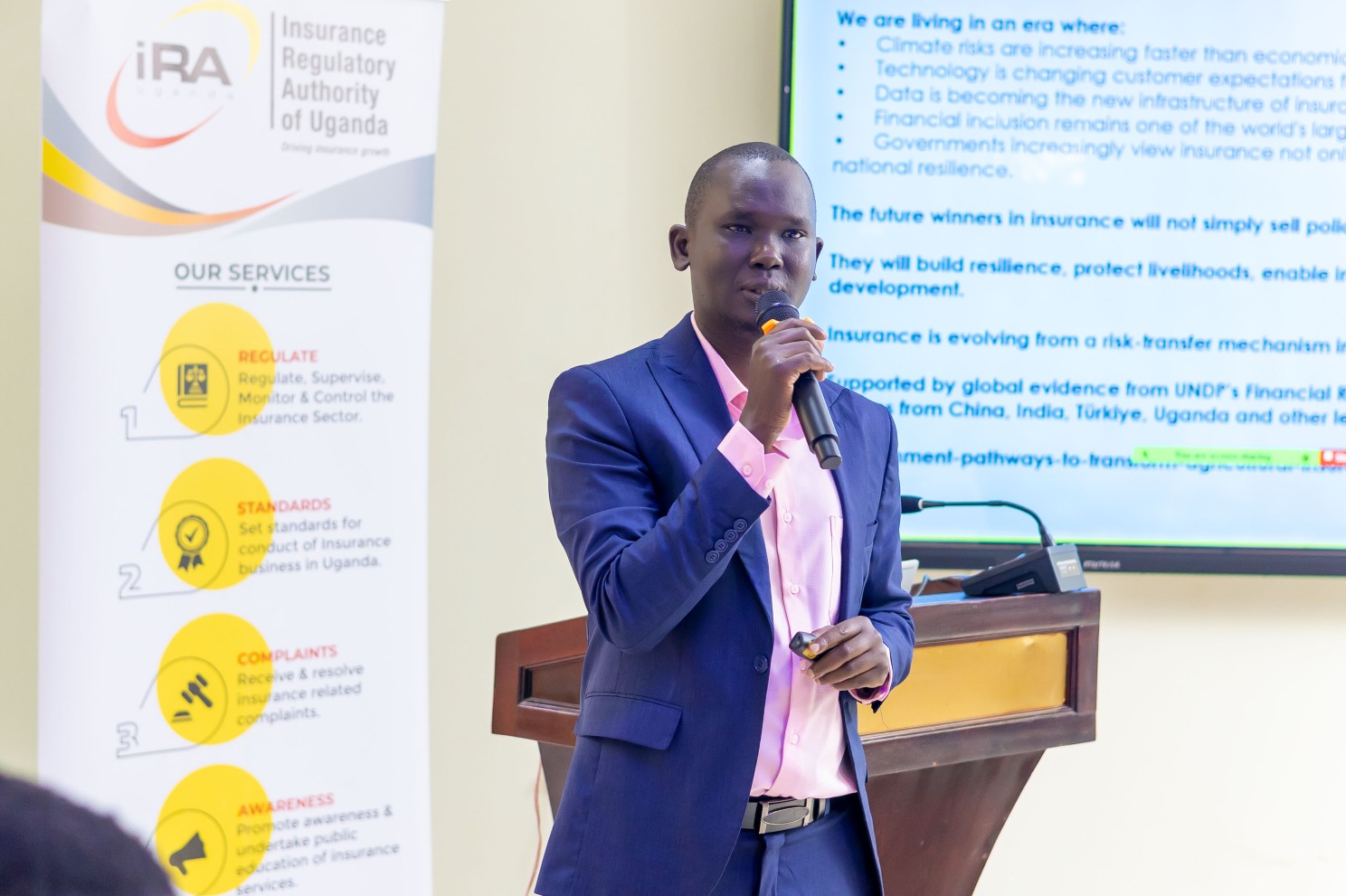
“The future of insurance will not be defined by the policies we sell. It will be defined by the resilience we create,” Bran told participants, urging insurers to embrace innovation as a tool for development rather than simply risk transfer.
His presentation highlighted artificial intelligence, satellite imagery, embedded finance and predictive risk intelligence as technologies capable of moving insurance from reacting to disasters toward helping societies predict, prevent, prepare and protect against them. He also identified smallholder farmers, women, informal workers and micro, small and medium-sized enterprises as the industry’s greatest untapped growth opportunity.
Zep Re’s Digital Transformation Analyst Mr. Awil Osman urged innovators to resist building technology for its own sake and instead focus on solving real customer problems that people are willing to pay to solve.
“A strong African fintech is not just digital. It is trusted, regulated, partnered and commercially disciplined,” Osman said, adding that successful startups scale through partnerships with insurers, regulators, banks and distribution networks rather than operating in isolation.
He pointed to opportunities in climate insurance, embedded protection for informal workers, API-driven insurance infrastructure and gender-inclusive insurance products while cautioning founders to validate customer demand before investing heavily in product development.
Government of Uganda also signalled its intention to play a more active role in enabling innovation. Mr David Kateeba from Uganda’s Science, Technology and Innovation Secretariat, outlined how sovereign cloud infrastructure, artificial intelligence capabilities and a growing deep-tech ecosystem could provide insurers and startups with the digital backbone needed to accelerate innovation.
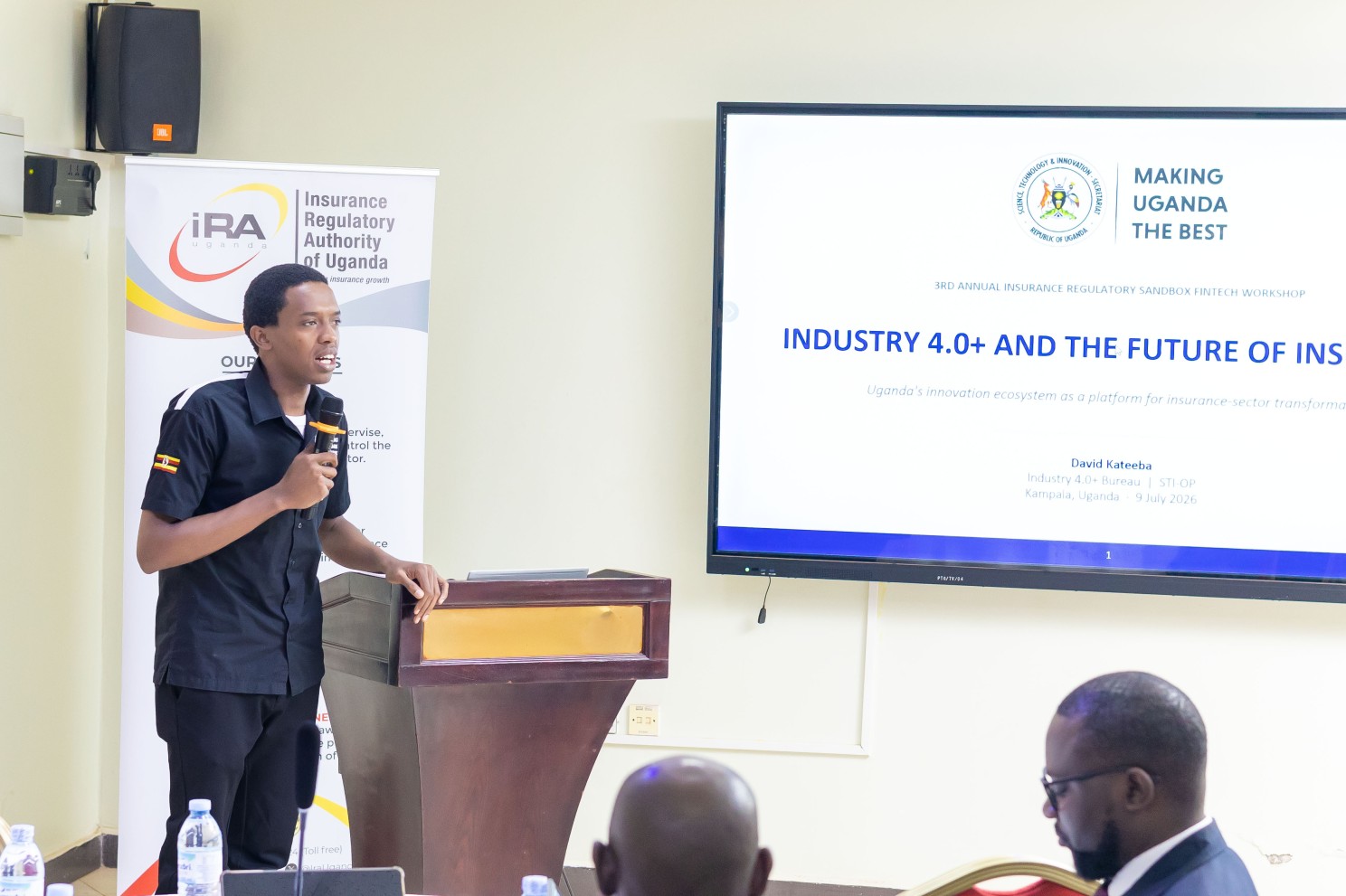
“Let’s build Uganda’s Insurtech future together,” Kateeba said, proposing joint pilot programmes, shared infrastructure and formal collaboration between government and the insurance sector.
Arthur Mukembo , the Team Lead at Future Lab, urged participants to move beyond ideas and begin building solutions capable of transforming Uganda’s insurance landscape. He pointed innovators to the IRA InsureX Programme, an incubation platform that nurtures promising insurtech concepts through mentorship, product development and business acceleration until they are ready for the market. From there, high-potential innovations can advance into the IRA Regulatory Sandbox, where they receive regulatory guidance, validation and testing to prepare them for commercial rollout.

Participants identified embedded insurance, climate-risk solutions, AI-powered underwriting and instant digital claims as some of the most promising opportunities for Uganda’s next generation of innovators. Yet speakers consistently returned to a common conclusion, lasting transformation will require regulators, insurers, fintechs, development partners and government institutions to build together rather than compete separately.
For a country seeking to expand financial resilience while accelerating digital transformation, Uganda’s evolving regulatory sandbox is becoming more than a policy instrument. It is emerging as a platform for testing how innovation, when guided by collaboration and public purpose, can extend insurance protection to millions who have historically been left behind.